
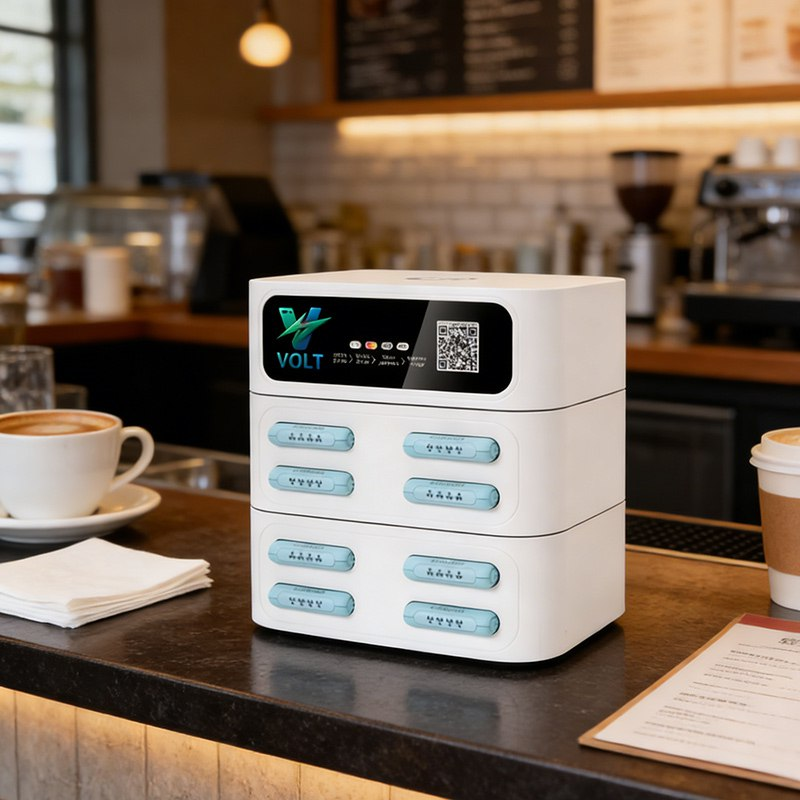
Since its birth in 2014, the shared power bank industry has undergone several major transformations. From initial public curiosity to today's introduction of fast-charging technology, the industry has moved from the 1.0 era to the 3.0 era.
The concept of shared power banks was still unknown, equipment costs were high, failures were frequent, and the entire industry was in the user habit cultivation stage.
With the popularization of 5G technology and rapid development of mobile chip technology, phone battery life became a focus of user attention, shared power bank usage fees increased accordingly, and profit models began to emerge.
Stackable shared power banks became mainstream, deposit-free models were perfected, technical barriers were broken, and especially the introduction of fast-charging technology brought innovation to the industry.
Shared power banks are known for their convenience. Users simply need to scan a QR code on their phone to easily borrow a power bank and charge their phone anytime, anywhere. Additionally, shared power banks have covered shopping malls, restaurants, hotels, airports, stations, and other places in major cities. No matter where users are, they can easily find power banks. Such extensive coverage not only provides convenience for users but also brings huge business opportunities for shared power bank companies.
The shared power bank market will continue to maintain strong growth momentum in the future. As users become increasingly dependent on mobile devices, demand for charging equipment will continue to grow. However, the power bank rental market also faces many challenges. Additionally, the popularization of fast-charging technology and intensifying market competition have brought new challenges.
Over the next decade, shared power banks will gradually become an indispensable part of people's lives. Market size will continue to expand, technology will continue to innovate, and sustainable development will become key. At the same time, companies will actively expand overseas markets, allowing more people to enjoy the convenience brought by shared power banks. It is expected that future shared power banks will focus more on improving user experience, providing more personalized and convenient services through continuous technological innovation and intelligent development.
In summary, shared power banks, with their advantages of convenience, technological innovation, and extensive layout, have become an indispensable charging solution in modern urban life. In the future, as technology continues to advance and markets continue to develop, shared power banks will bring users more efficient, convenient, and personalized charging experiences.
With the booming development and popularization of global tourism, travelers' travel experiences and convenience have become the focus of industry attention. Today, mobile phones and other electronic devices have become essential tools for people's travel activities such as taking photos, checking in, navigation, payment, and entertainment. However, mobile phone battery life is limited, and prolonged use can easily lead to battery depletion, causing many inconveniences during travel.
Shared power banks, as an innovative and efficient emergency charging solution, have rapidly emerged and gained popularity in the tourism industry. With the development and rise of the sharing economy, shared power banks can now be seen in almost every country and region.
The emergence of shared power banks has made travel no longer require special preparation of power banks, allowing people to enjoy their entire journey more easily and freely. As the best travel solution currently available, shared power banks have indeed impacted our travel:
The rental and return process of shared power banks is very simple, not only saving time but also greatly improving charging convenience, ensuring travel is not interrupted by low battery.
The emergence of shared power banks means we no longer need to purchase expensive power bank equipment in advance. We only need to pay a small rental fee to get charging services. This greatly reduces the cost of using power banks.
The popularity of shared power banks has almost covered all public places with dense populations. In these scenarios, people can find charging methods suitable for them. Additionally, shared power banks support multiple phone models and charging interfaces, meeting different usage needs.
Shared power banks reduce the purchase and use of personal power banks, thereby reducing resource waste and environmental pollution. At the same time, through recycling and intelligent management, shared power banks also achieve maximum resource utilization.
Not everyone has used shared power banks, but travelers' acceptance and recognition of shared power banks are gradually increasing. It has indeed won the favor of many travelers who use this charging device for the first time.
It can be said that the existence of shared power banks can enhance traveler experiences and plays an extremely special role in the tourism industry itself and the convenient services it provides. With its convenience, reliability, and stability, it has improved users' travel planning and experiences to some extent.
Looking at the situation in Asian countries and other tourist cities, the application of shared power banks is very extensive and successful. We believe that with a certain degree of promotion and publicity, shared power banks will truly unleash their potential, promoting progress and leaps in many industries including tourism, benefiting more fields.