
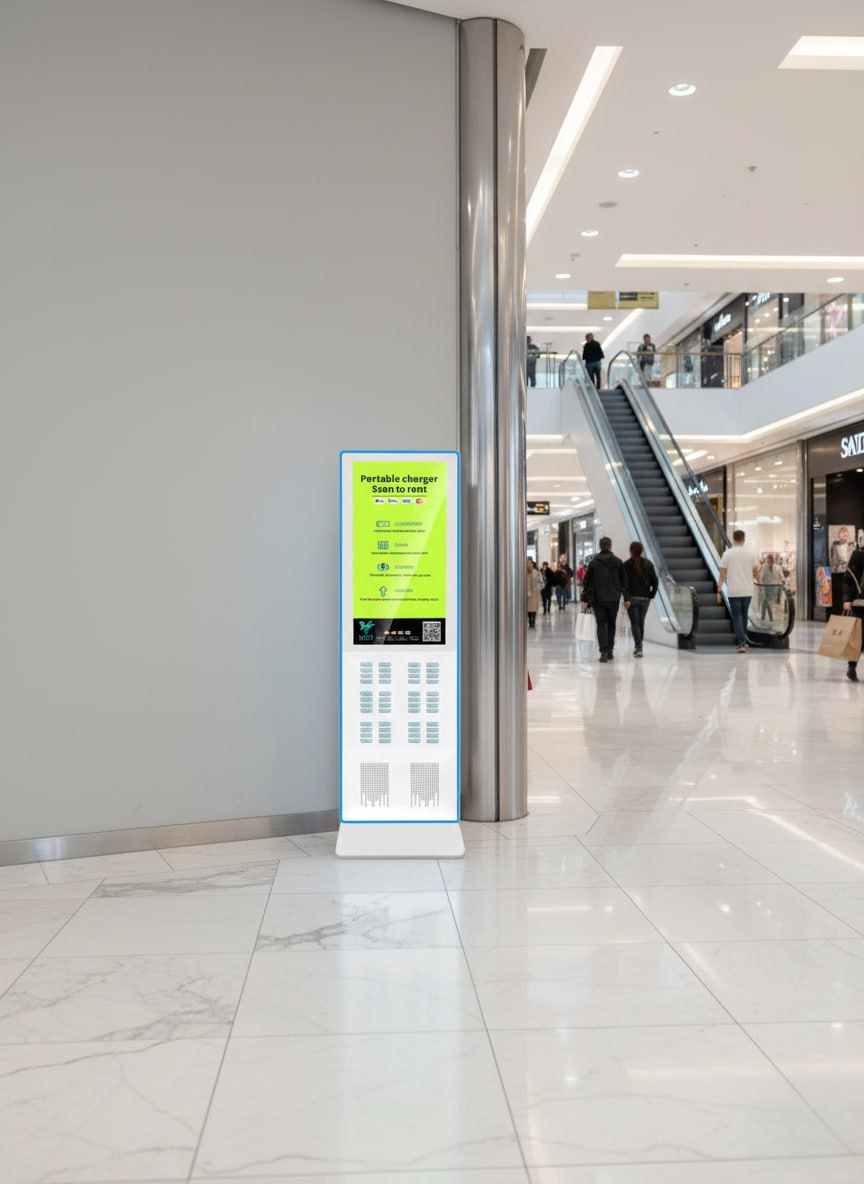
In today's fast-paced life, smartphones have become an indispensable part of people's daily lives. Whether for navigation, social interaction, entertainment, or payment, smartphones play a crucial role. However, as phone features become increasingly powerful, battery consumption issues have become more prominent. Especially in shopping malls, consumers spend long hours shopping, dining, and entertaining, often facing the problem of low phone battery.
Therefore, investing in shared power banks in shopping malls has many advantages. This article will explore why shopping malls should invest in shared power banks, helping investors make wiser decisions.
With the popularity of smartphones, they have become an indispensable part of our daily lives. From payments and navigation to socializing and entertainment, almost all daily activities rely on smartphones. However, battery anxiety has also become increasingly common, especially in shopping malls, where low battery warnings are particularly frustrating. This is where shared power bank stations emerge—providing great convenience to consumers, like timely rescue.
Shopping malls are the "third space" in urban life, where consumers spend hours shopping and entertaining. As smartphone usage increases, battery consumption has become an unavoidable problem. From early free charging outlets to today's widespread deployment of shared power banks, supply and demand relationships have driven the evolution of this service.
"You can leave your wallet at home, but you can't leave your phone at home." This perfectly sums up the reality of modern life. Smartphones have long transcended the role of simple communication tools—today they are essential for payments, navigation, social interaction, and entertainment. However, with this convenience comes battery anxiety, causing countless inconveniences.
Today, we increasingly rely on smartphone navigation for route guidance. Whether in large unfamiliar shopping malls, complex transportation hubs, or remote tourist attractions, smartphone navigation is crucial. However, when phone battery is low, losing navigation is like being blindfolded, leaving users lost and frustrated.
Mobile payments have penetrated every aspect of life—from shopping and dining to transportation and entertainment. But what if your phone suddenly shuts down while you're in line to pay? Without cash on hand, that embarrassment and inconvenience is hard to forget. A dead phone means inability to pay, seriously affecting daily life.
Smartphones also keep us connected with family and friends. Through social media, we can share life moments and learn about loved ones' latest updates. However, when phone battery is extremely low, people may miss important information, creating a sense of isolation anxiety, as if cut off from the world.
Whether watching short videos, listening to music, or playing games, smartphones provide entertainment during leisure time. But just as you're immersed in a video, the annoying low battery alert suddenly interrupts your enjoyment. This sudden interruption of entertainment can leave users frustrated and irritable.
Psychological research shows that when phone battery drops below 20%, over 70% of users feel anxious, shopping willingness decreases, and some even leave the mall early. This "low battery panic" directly affects consumers' shopping time and purchase decisions.
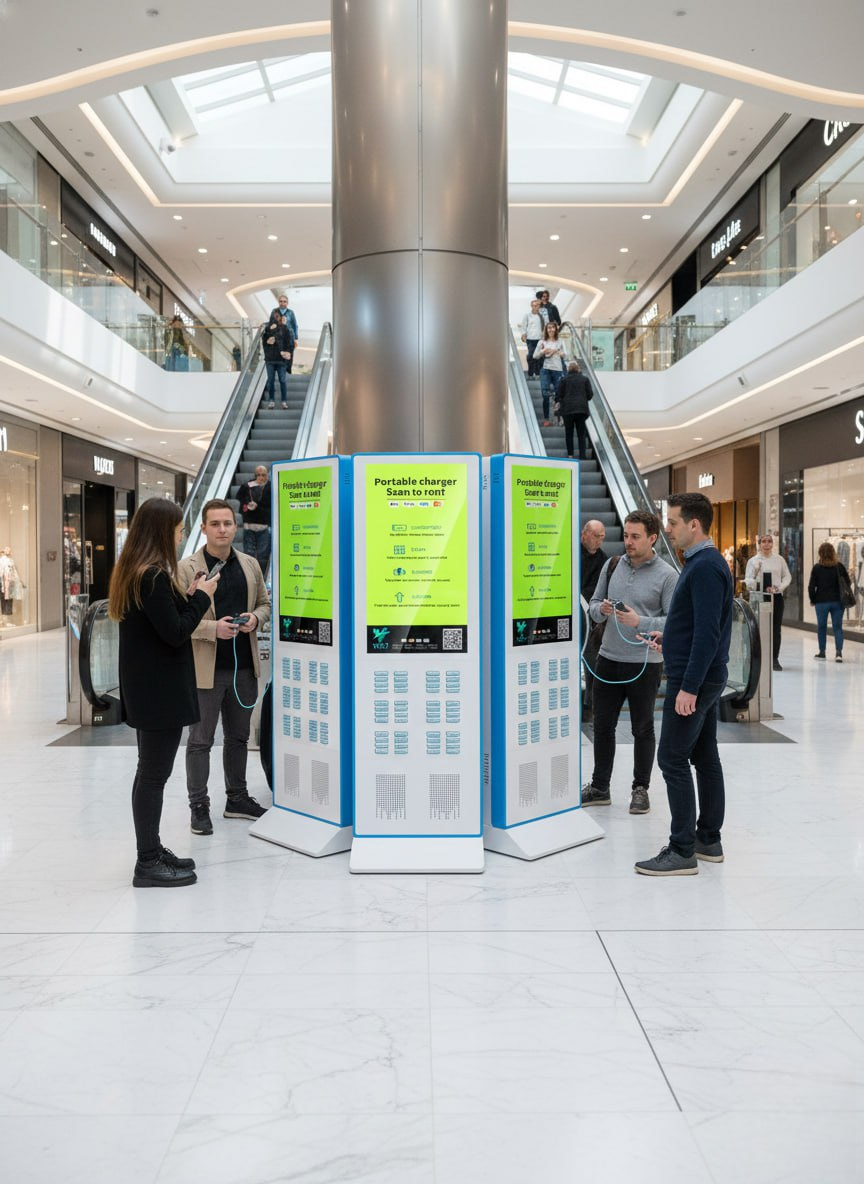
Users using shared power banks in shopping malls
The main purpose of shopping malls investing in mobile charging stations is to meet growing charging needs, enhance customer experience, and extend customer dwell time and spending. Shared power banks, with their unique advantages, have become an ideal solution for battery anxiety.
Shared power banks are ubiquitous in malls, restaurants, and transportation hubs, making it easy for consumers to find and rent them. The rental process is simple and efficient—just scan a QR code to quickly pay and enjoy convenient charging without carrying a personal power bank.
As smartphones become an indispensable part of people's lives, low battery has become a common problem. Shared power banks provide an instant charging solution, avoiding inconvenience caused by dead phones.
The profit model of shared power banks is simple and clear, with main revenue sources including user rental fees and advertising on charging stations or mobile apps. As user demand continues to grow, the profitability of shared power banks will continue to increase, ensuring sustainable business development.
Shared power suppliers have professional technical teams and comprehensive operational systems to ensure reliable service and maintenance. By analyzing user data, operators can provide personalized promotional activities, thereby improving customer engagement and satisfaction.
As smartphone usage continues to grow, consumers increasingly rely on smartphones for navigation, payments, social media, and entertainment. Mobile charging stations meet this need by providing convenient charging solutions within shopping malls.
"For every additional hour spent in the mall, average spending increases by more than 30%." A commercial operations director stated that this is a common phenomenon across the industry.
For example, a customer originally planned to shop for only one hour, but after renting a power bank, she ended up staying for three hours and even had a meal in the mall. Data from a shopping mall shows that in areas with charging stations, customer dwell time increased by an average of 42%, and additional spending increased by 28%.
By providing "free charging" services, shopping malls encourage customers to explore more stores, participate in activities, and make unplanned purchases.
• Enhance Mall Attractiveness: Providing mobile charging stations makes shopping malls more attractive to consumers, giving them a competitive advantage.
• Attract New Customers: Customers with low phone battery may specifically choose shopping malls that offer charging services, thereby increasing foot traffic.
With the booming sharing economy, mobile charging stations are gradually becoming standard in public places. Shopping malls investing in this technology can attract young consumers and expand their customer base.
• Build Trust: By integrating new technologies and services, shopping malls demonstrate their commitment to customer convenience, thereby earning greater trust.
• Encourage Word-of-Mouth: Satisfied customers may share their experiences on social media or recommend the shopping mall to friends and family, thereby increasing brand awareness.
Shared mobile charging stations can bring many advantages to shopping malls. They not only meet consumer needs and enhance shopping experiences but also create additional revenue. For shopping malls, deploying shared power banks is undoubtedly a wise move.