
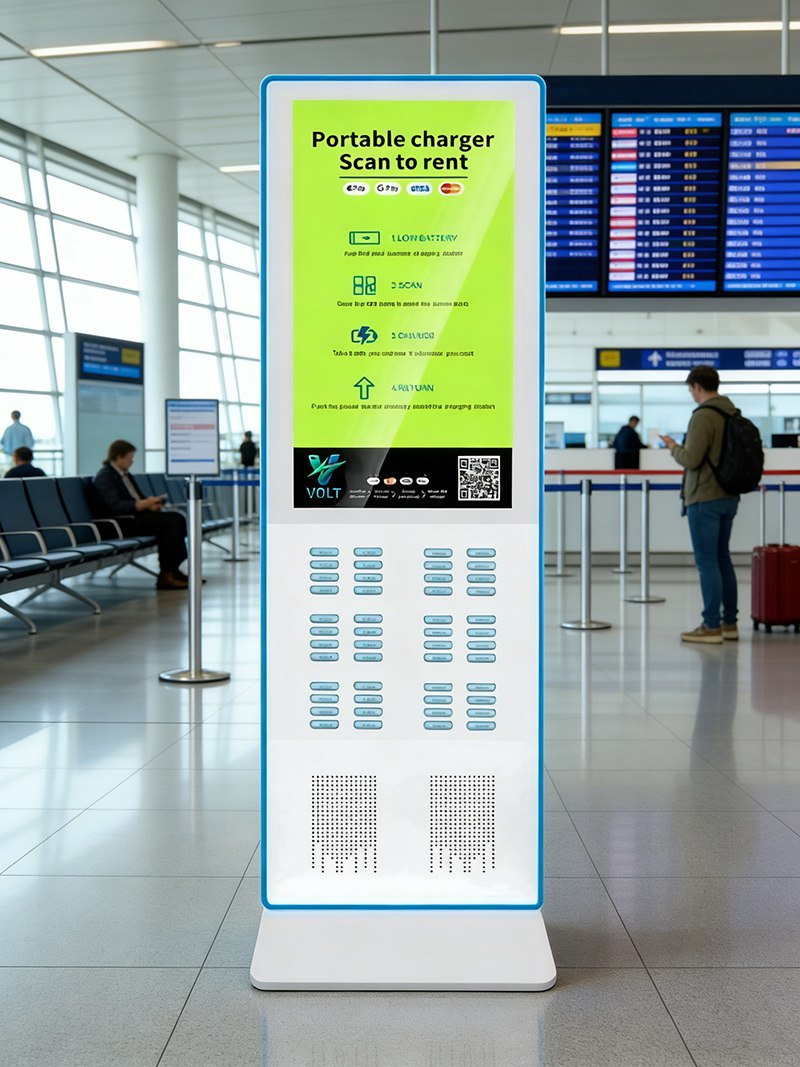
Airports, as important transportation hubs, are both bridges connecting cities and temporary stops for travelers. With technological advancement and the popularization of smart devices, modern travelers increasingly rely on electronic devices—not only for communication and entertainment but also for navigation, payment, booking, and more. However, prolonged use quickly depletes battery power, making charging facilities crucial for airport travelers.
Portable charging stations combine efficient charging and mobility, providing travelers with convenient power solutions. This article explores the necessity of adding portable charging stations at airports and provides valuable insights for improving airport service quality and traveler satisfaction.
With the rapid development of the global aviation industry, airports have become important gateways for cities, receiving large numbers of travelers daily. Today, smartphones, tablets, laptops, and other electronic devices have become indispensable items for travelers. However, these devices consume enormous amounts of power, especially during long flight delays or layovers, making the demand for charging facilities increasingly urgent.
With global economic recovery and booming tourism, airport passenger traffic continues to grow. This not only puts pressure on airport operations but also challenges their ability to provide adequate charging facilities.
Modern travelers typically carry multiple electronic devices, which play crucial roles in their journeys.
Additionally, over 90% of travelers use smartphones at airports, and over 60% use laptops or tablets. Smartwatches, e-readers, and gaming devices are also becoming increasingly popular. These devices are not only used for communication but also for web browsing, video streaming, gaming, and other power-intensive activities, requiring frequent charging.
As electronic device power consumption continues to increase, convenient charging methods have become increasingly important. Travelers' main concerns include:
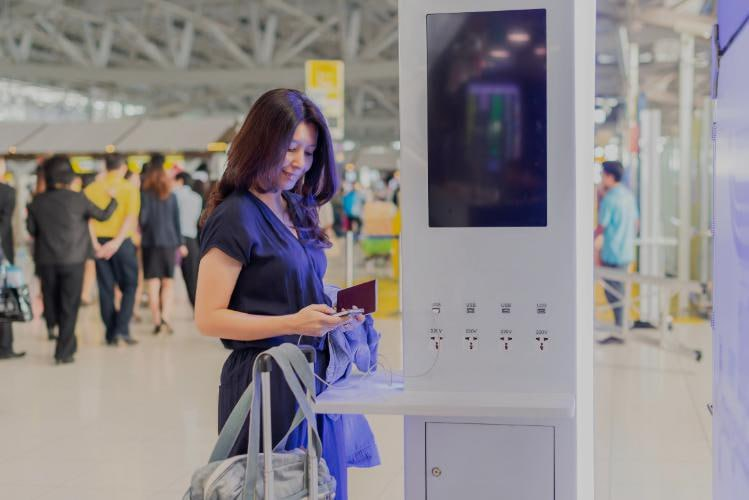
Airport travelers using charging equipment in waiting areas
Many airports provide traditional charging methods, such as wall outlets and fixed charging stations, but there are still some problems:
Many airports have installed fixed charging outlets in waiting areas and gates. However, these outlets are usually limited in number and unevenly distributed. During peak hours, passengers often need to queue or struggle to find available outlets. Additionally, fixed charging stations lack flexibility and cannot be dynamically adjusted according to passenger needs.
Some airports provide limited types of charging interfaces, such as only Type-C charging cables, which causes inconvenience for travelers who need other interfaces. The single type of interface reduces the overall efficiency and convenience of charging services.
Charging stations are often concentrated in certain areas while completely absent in others. This uneven distribution forces passengers to spend unnecessary time and effort searching for charging facilities, leading to frustration and dissatisfaction.
Some airports fail to provide clear signage for charging stations, making it difficult for passengers to find them. Unclear or misleading signs exacerbate inconvenience and negatively impact passengers' overall experience.
Therefore, insufficient charging facilities often lead to passenger dissatisfaction, with complaints on social media about limited charging options, slow charging speeds, and other issues, ultimately affecting airport reputation.
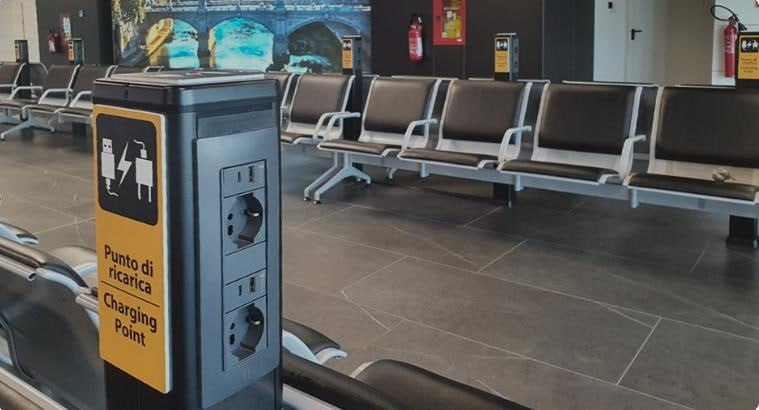
Charging point signage in airport waiting areas
Shared power bank rental services are becoming increasingly popular, especially in high-traffic places such as shopping malls, airports, train stations, restaurants, and cafes.
These services work by allowing users to scan QR codes, register or log in, and pay a deposit or rental fee to borrow power banks. These power banks are usually equipped with multiple charging interfaces, such as USB-C, Lightning, and Micro-USB, making them compatible with various devices. Users can return the power banks to designated locations after use to get refunds.
Compared to traditional fixed charging outlets, portable charging stations have the following main advantages:
Portable charging stations can be strategically placed in high-traffic areas such as waiting rooms, gates, and commercial areas. Passengers can rent power banks anytime without needing to charge at fixed locations.
Most portable charging stations offer multiple charging options, including USB-A, USB-C, and Lightning interfaces. Some high-end models even support wireless charging, further enhancing user convenience.
Shared power banks not only meet the growing demand for charging services but also improve airport operational efficiency and brand image. As technology advances and passenger expectations continue to evolve, portable charging stations will play an increasingly important role. Airports should actively expand charging infrastructure, providing seamless, high-quality services to ensure passenger satisfaction and long-term sustainable development.